
Deadlock Anti-Heal Guide: What to Buy Against Nurse Harrow and Who to Debuff
Compare Healbane, Toxic Bullets, Decay and Inhibitor. Apply healing reduction to the right target and understand why enemies can still recover.
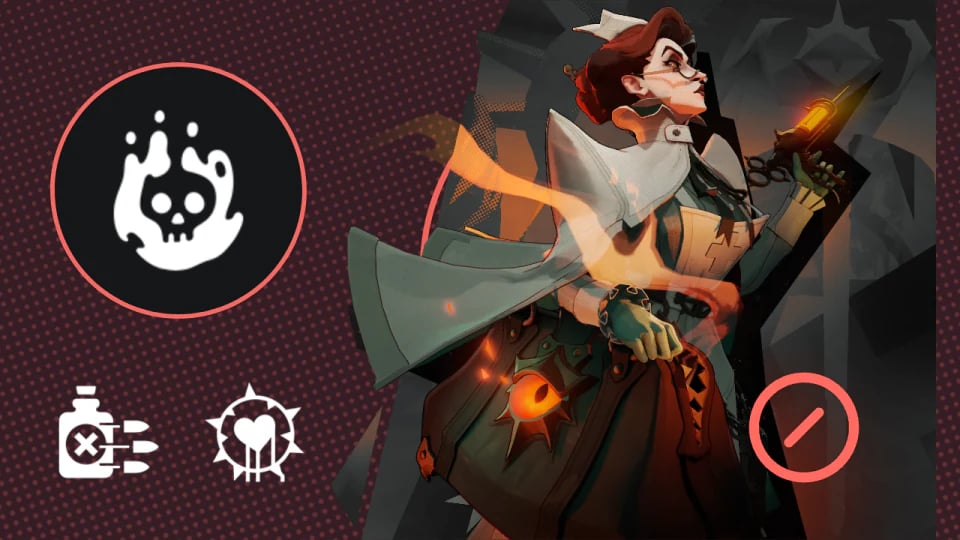
An enemy almost dies several times, Nurse Harrow restores their health, and someone finally types “buy anti-heal.” You buy it, shoot again and see roughly the same result. That does not automatically mean healing reduction is useless. The effect may not have triggered, may be on the wrong hero, or may have expired before the important healing arrived.
Owning anti-heal is only the beginning. You need to deliver it to the right recipient during the relevant part of the fight. Harrow’s arrival makes that especially useful, but the same reasoning applies to other sources of recovery.
These item mechanics were checked on October 24, 2026. Your hero and the actual fight determine the purchase; there is no single best choice for every situation.
First ask who is receiving the healing
Incoming Healing describes healing received by the affected target. If Harrow shoots healing needles into a teammate, apply incoming-healing reduction to that teammate. Debuffing Harrow does not automatically suppress every heal she sends to the rest of her team.
As a simplified example, suppose a target would receive 100 healing, has no resistance to anti-heal and has no other relevant modifiers. A single 35% reduction leaves 65. That illustrates what the stat means; it does not predict an exact match result with healing amplification and other effects involved.
Call the focus target first. If the team attacks one hero while you debuff another, the item can look correct in your inventory and accomplish very little in the exchange.
Four options and their delivery conditions
These are base values for ordinary item versions on the verification date. Upgrades and modified versions can differ, so read the card you are actually buying.
- Item: Healbane How it applies the effect: Your Spirit damage debuffs the enemy.
Base incoming-healing reduction: 35% - Item: Toxic Bullets How it applies the effect: Bullets build up a bleed; the bleeding target receives reduced healing.
Base incoming-healing reduction: 35% - Item: Decay How it applies the effect: An active ability applied to a selected target.
Base incoming-healing reduction: 50% - Item: Inhibitor How it applies the effect: Bullets build up an effect that reduces outgoing damage and incoming healing.
Base incoming-healing reduction: 40%
Healbane is worth considering when you reliably deal Spirit damage to relevant enemies. It also heals its owner when an enemy hero dies under its effect. Pressing any ability is not enough by itself: the damage type matters.
Toxic Bullets requires enough bullet contact to complete its buildup. If your usual exchange is one shot followed by a long retreat, do not assume the bleed will always activate. Consider how much firing time you really get against the target.
Decay lets you choose the timing of an active application. Its damage over time is based on current health, cannot kill and does not trigger item effects. In particular, do not plan around Decay’s own damage automatically activating Healbane.
Inhibitor combines healing reduction with reduced outgoing damage, but also requires bullet buildup. Consider it when you need to limit an opponent’s offense and recovery together. A larger number still leaves the practical question of whether you can apply the effect.
Choose delivery before comparing percentages
Imagine a hero who can reliably reach a distant target with Spirit damage but rarely gets sustained gunfire on them. An accessible Healbane application may serve that situation better than bullet buildup. A hero who keeps an enemy under fire but rarely connects with Spirit damage faces the opposite choice.
An active item also asks you to press another button before the main healing arrives. Remembering it after the target recovers is too late for that window. If you already struggle to manage your active abilities, that is a meaningful limitation of the purchase.
Agree who can apply the effect to the primary target. One clear assignment is more useful than several vague promises from players who cannot reach that enemy. Buying anti-heal on everyone automatically is not the answer either: the team still needs damage, protection and control.
Against Harrow, the healing window matters
Healing Needles restores allied health, while Wretched Vapors temporarily defers incoming damage. Subsequent healing prioritizes removing the specters holding that damage. The Nurse Harrow guide explains the full support cycle.
The tactical implication is to debuff the teammate Harrow intends to support and maintain useful pressure during that window. If healing reduction was active during harmless poking but expired before the serious healing, it contributed little to the part that mattered.
Do not assume Specter Crash will now guarantee a kill. Harrow may still provide enough support, the target may retreat, or your team may split its attention. Anti-heal makes recovery less favorable; it does not decide every remaining action in the fight.
A safe angle onto Harrow herself can force her to reposition. However, chasing through her whole team may cost more than steadily pressuring an accessible target under healing reduction.
Why the enemy can still survive
Check the basics in order. Did the effect activate? Was it on the healing recipient? Was it active at the relevant moment? Did your team concentrate its damage?
Then inspect defensive tools. For example, Leech reduces the effect of enemy-applied healing reduction. That is not total immunity, but it can explain why the outcome differs from a simple calculation involving one debuff.
Keep healing, barriers and delayed damage separate. Healing restores health. A barrier provides a protective pool. Vapors changes when damage arrives. An incoming-healing debuff is not automatically a universal answer to every kind of protection.
Your own damage type also matters. Even one of Danny’s abilities combines Bullet and Spirit components. If Healbane is not working as you expected, identify its trigger using the damage-type guide.
Healing reduction does not replace crowd control
Sometimes the problem is not the enemy’s recovery but an ability controlling your team. Another anti-heal purchase may leave that problem intact. You need a tool that answers the action actually preventing your team from fighting.
Silence Glyph, for example, explicitly states that silence does not interrupt channeling abilities. Do not buy it solely to stop a channel that is already underway. Choosing control and choosing healing reduction are related but distinct decisions.
After a failed fight, review one moment: when did the healing start, and what debuff was on its recipient then? That gives you a concrete change for the next purchase or application.
Frequently asked questions
Should anti-heal go on Harrow or her teammate?
Apply it to the healing recipient your team wants to kill. Incoming-healing reduction on Harrow affects healing she receives; it does not automatically spread to every ally she supports.
Why did Toxic Bullets not activate on the first hit?
The item uses bullet buildup before applying its bleed and associated healing reduction. Owning the item and landing an individual shot do not necessarily mean the debuff is already active.
Can I buy both Decay and Healbane?
Yes, but do not expect Decay’s damage over time to trigger Healbane: it does not apply item procs. Healbane needs another appropriate Spirit-damage source. Judge the pair by your needs and available slots.
Will two healing-reduction items completely disable healing?
Do not add their displayed percentages as ordinary numbers or promise a complete shutdown. Effect-combination rules, active durations and the target’s defensive modifiers affect the result. Reliable application comes before assumptions about stacking.
What if the debuff is applied correctly and the enemy still lives?
Check defensive items, coordinated damage and whether Harrow can keep supporting without pressure. A different angle, control or more available damage may solve the problem better than another purchase aimed at the same mechanic.
FOR THE PLAYS
YOU DIDN’T RECORD.
Record clips from your Deadlock replays. Join the beta and get free recording credits at launch.
JOIN EARLY ACCESSNo spam. One email when it opens.