
Deadlock Violet Guide: Ink Cover, Sliding and Collecting Sketches
Learn Living Ink’s two modes, Flow State resets, Still Life’s stun condition and how Violet’s ultimate works. Turn creative tools into useful team fights.
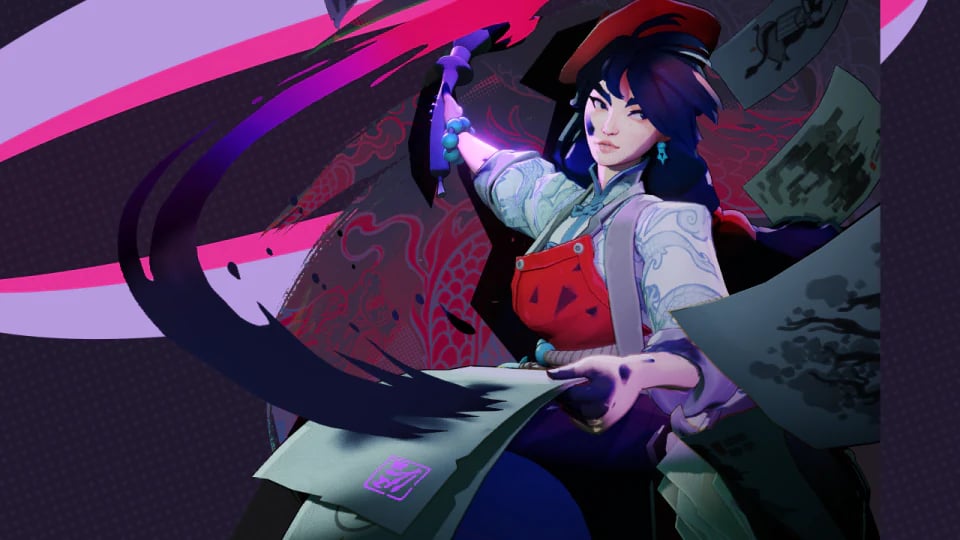
You paint a beautiful line across a passage, block the enemy’s shots—and realize your teammate cannot get through either. Then you start drawing a retreating opponent, turn toward someone else and fail to finish the sketch. Violet can reshape a fight, but that freedom comes with responsibility.
Her appeal is the way movement, shooting and control of space connect. Start by learning when to choose damage and when to create cover, then add sliding and sketch collection. Elaborate tricks can wait. A clear route through your own ink cannot.
The mechanics below were checked on October 24, 2026. Positioning advice and suggested sequences are options to work with, not a mandatory rotation.
Living Ink gives you two different decisions
The first ability has an Empower mode on the ability input and a Draw mode on the ADS action, normally right-click. If you use custom bindings, follow the action displayed in your tooltip.
Empower brings your next three bullets to life, allowing you to steer them in flight. They deal increased Bullet damage and splash Spirit damage. Successful hits against heroes reduce ability cooldowns; item cooldowns receive half as much reduction.
Draw creates a solid stroke that blocks characters and projectiles. A heavy melee attack can destroy it, but the attacker takes Spirit damage.
Think of this as a choice between immediate pressure and changing the position. When a teammate already has a target pinned down, empowered shots can help use the opening. When your team needs to cross a dangerous firing angle, a well-placed stroke may provide more value.
Avoid assuming a bigger wall is automatically better. Picture where you and your teammates will move afterward, and where your next shots will come from. Cover that shuts down your own attack can give the opponent a free pause.
Draw small, useful pieces of cover
Start with a specific job. Block one dangerous angle. Leave an escape lane. Cut off the nearest enemy’s comfortable firing line while a teammate repositions. A modest stroke with an obvious purpose is easier to use than an enormous construction in the middle of a chaotic fight.
Ink does not provide permanent safety: a heavy melee can break it. Spend the time it creates immediately. Reload, change your angle or help an injured teammate leave. Standing behind the stroke indefinitely lets the enemy decide when the fight resumes.
Before drawing across a narrow passage, check your teammates. One may be retreating, another preparing to attack, and a third already standing on the opposite side of your planned barrier. The same stroke can save one person and obstruct another.
Give Flow State a route before using it
The second ability drags a brush forward and leaves a trail. Allies gain extra slide distance from the trail. Enemies in the brush’s path take Spirit damage and a fading slow. The damage increases as the brush travels farther. Reactivating flicks the brush forward, ending the ability early for damage over a larger area.
Living Ink also has an important passive: casting another ability refreshes Flow State’s cooldown. That lets you connect movement with the rest of your kit. It does not make every resource unlimited. Other cooldowns, available charges and your ability to land attacks still constrain the sequence.
A practical approach is to send the brush along a useful route, slide toward a new angle, use another ability and then reassess your next Flow State. That is easier to control than pressing everything first and searching for an exit afterward.
The early flick has a tradeoff: it ends the current action. Use it when the wider hit now matters more than continuing to guide the brush. Availability alone is not a reason to reactivate it immediately.
Finish Still Life before chasing its reward
Still Life selects a hero as your subject and deals Spirit damage while you look at them. Completing the sketch adds damage, stuns the target and drops a collectible sketch. Picking up sketches permanently grants stats based on the subject.
There are two separate checkpoints here. Starting the ability is not an immediate stun. Completing it is not yet the permanent stat reward: you still need to collect the sketch.
Choose someone you can keep looking at. An enemy already fighting your teammate in open space is often a more manageable subject than someone disappearing around a corner. However, do not walk into the whole enemy team just to finish the drawing. Even a successful stun can cost more position than it earns.
Apply the same judgment to collection. Check who controls the ground around the dropped sketch. A permanent bonus is attractive, but throwing the current fight to pick it up is a poor exchange.
Abstract Landscape is not an impassable cage
Violet’s ultimate creates a circular display that blocks vision and grants allies Spirit. Enemies inside are revealed. Leaving causes Spirit damage, silence and a slow, while consuming the ink in the base version.
The enemy can therefore choose to leave and accept the consequences. Do not plan as though the ultimate physically guarantees they will stay until your team finishes attacking. Place it where either decision is awkward: remain under coordinated pressure or leave into space your team already controls.
The final upgrade changes the ink’s behavior so it is no longer destroyed in this way. The allied Spirit Lifesteal benefit belongs to the second upgrade. Neither should be assumed when you first unlock the ultimate.
Fix the decision before replacing the build
If Empower rarely connects, work on using the three shots before chasing more theoretical damage. If you repeatedly obstruct yourself with ink, simplify the drawing. If Still Life keeps failing because you switch targets, choose one manageable subject for that exchange.
Then buy around a clear problem: survivability to hold your position, ability availability for repeat actions, or damage for the part of the kit you consistently land. Violet uses both Bullet and Spirit components, so the damage-type guide can help you connect a purchase to its actual purpose.
When playing alongside Nurse Harrow, consider whether your own ink obstructs a useful line of support. Good positioning accounts for allied routes and firing lines as well as enemy ones.
Frequently asked questions
How do I draw instead of empowering my bullets?
Empower uses the first ability input, while Draw uses ADS, normally right-click. With custom controls, check the ADS binding and Living Ink’s tooltip instead of copying another player’s physical keys.
Can characters walk through an ink stroke?
The stroke blocks characters and projectiles. A heavy melee can destroy it, at the cost of Spirit damage to the attacker. Leave deliberate openings so your cover does not obstruct your own team.
Why does another ability make Flow State available again?
That is Living Ink’s passive effect: casting another ability refreshes Flow State. It supports connected sequences, but it does not remove the restrictions on your other abilities or items.
Does Still Life stun immediately?
No. The stun happens when the drawing is completed, and you need to keep looking at the subject while working. Afterward, the dropped sketch is a separate pickup that you should collect only when the position allows it.
Can enemies leave Violet’s ultimate?
Yes. Leaving is part of its design: it triggers damage, silence and a slow. Account for the enemy’s exit route rather than assuming the circle guarantees they will remain inside for the whole fight.
FOR THE PLAYS
YOU DIDN’T RECORD.
Record clips from your Deadlock replays. Join the beta and get free recording credits at launch.
JOIN EARLY ACCESSNo spam. One email when it opens.